REVIEW · TAOS
Taos Artisan Walking Tour + Chocolate
Book on Viator →Operated by Heritage Inspirations · Bookable on Viator
Taos art has a sweet side. This Taos Artisan Walking Tour + Chocolate turns a simple stroll into a guided walk through Taos’s creative core, with stops that connect the Taos Artist Society story to working studios—and then closes with an included hot or cold chocolate elixir.
I like that the tour gives you more than names on a plaque. You get a clear thread for how Taos became a magnet for American artists, and you also get face-to-face time with makers, including a textile weaving demo at Tres Estrellas Design led by Carla. That mix—history plus hands-on craft—makes it easier to understand why the art of northern New Mexico looks the way it does.
One thing to consider: the tour is built around specific studio/museum visits, and if a site needs a substitution (for any reason), the experience can shift. At $145 per person, it’s worth going in knowing you’re paying for access plus interpretation, not just sightseeing.
In This Review
- Key things to know before you go
- Starting at El Monte Sagrado: the walk begins before you hit the Plaza
- Couse-Sharp Historic Site: where the Taos Artist Society story gets context
- Blumenschein Home & Museum: meeting Rich Nichlos in an active art studio
- Taos Plaza: the WPA frescoes are right there—no ticket needed
- Tres Estrellas Design: Rio Grande blankets, churro sheep, and a real weaving demo
- The included chocolate elixir: a sweet finish with a practical purpose
- Price and value: what $145 is really paying for
- Who should book this Taos walking tour—and who should skip
- Final call: should you book Taos Artisan Walking Tour + Chocolate?
Key things to know before you go
- Small group feel: the maximum group size is 2 travelers, so the pace stays personal.
- Two admissions included: ticketed entry is part of the Couse-Sharp Historic Site and the Blumenschein Home & Museum stops.
- Free art stops in the middle of it: Taos Plaza frescoes and Tres Estrellas Design are listed as free admissions.
- Meet artists, not just art: you’ll talk with people behind the work, including a textile-focused stop with Carla.
- Chocolate is built in: plan for an included hot or cold chocolate elixir, served during the tour.
- Guide quality matters here: guides like Lewis and Lesley were described as strong in local art history and conversation.
Starting at El Monte Sagrado: the walk begins before you hit the Plaza
The tour starts at El Monte Sagrado, 317 Kit Carson Rd, Taos, NM 87571, and runs about 3 hours. With a 1:00 pm start time and a walking-based format, you’ll want comfortable shoes first, then everything else. This is a good choice if you like your Taos time measured in steps, not bus rides.
You’ll also be glad it’s structured. The route is aimed at keeping you in the historic area around Taos Plaza, so you’re not constantly asking where to go next. And since it uses a mobile ticket and is offered in English, you can focus on the art and stories instead of logistics.
One practical note: the tour information says sunscreen & hat aren’t provided. Taos can still feel bright even when it doesn’t look hot, so bring basics if you’re sensitive to sun.
Couse-Sharp Historic Site: where the Taos Artist Society story gets context
Your first stop is the Couse-Sharp Historic Site, where you’ll spend about 30 minutes and admission is included. This is the kind of place that works best when you come ready to connect dots. You’re not just looking at a building—you’re learning about the founding fathers of the Taos Artist Society, which is the backbone of why Taos became such a creative crossroads.
What I like about this stop is that it sets the tone for everything after. If you understand who was involved and why they cared about life in Taos, the later studio and gallery visits land with more meaning. You’ll also get a sense of how art communities form: people gather, ideas travel, and a place becomes a brand without meaning to.
Possible drawback: if you’re short on time in Taos, this is one of the stops that sets the historical framework. Skipping it would make the rest feel more like artwork-of-the-day than a connected story.
Blumenschein Home & Museum: meeting Rich Nichlos in an active art studio
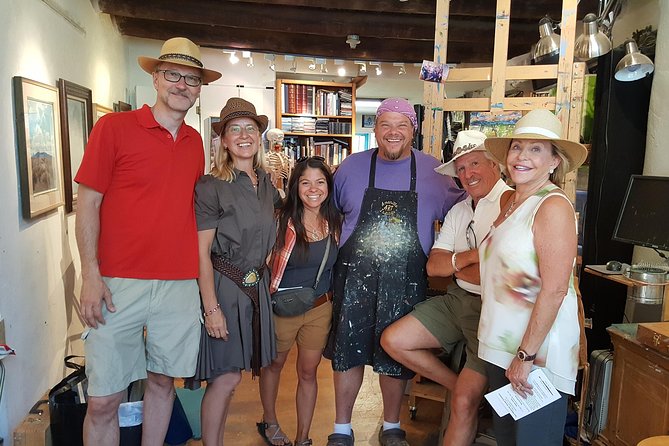
Next up is the Blumenschein Home & Museum for another 30-minute stop, and again, admission is included. Here, the focus is on an artisan experience through Ernest Blumenschein’s Art Studio. The tour notes that you’ll meet Rich Nichlos in that studio, which matters because it changes the vibe from museum-only to maker-in-the-room.
This is also where a strong guide can make a noticeable difference. People described guides like Lewis and Lesley as fluent in local art history and good at connecting what you see to the bigger Taos artist network. In a stop like this, conversation can turn your look into understanding: why certain choices were made, what local influences shaped styles, and how those traditions continue to echo.
Tip for you: keep your questions simple and direct. If you want to know how a style developed, ask what they think is unique about the Taos angle. If you want technical insights, ask about materials and process. Short questions usually get the best answers during a walking tour format with a tight schedule.
Taos Plaza: the WPA frescoes are right there—no ticket needed
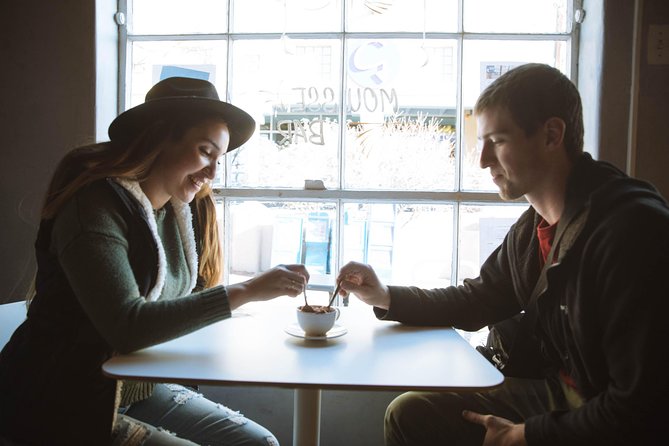
Then you’ll shift to Taos Plaza, where the admission is listed as free and the time is about 15 minutes. The big draw here is the WPA commissioned frescoes painted by members of the Taos Artist Society.
This stop is quick, but it’s valuable. It gives you a public art layer—art that isn’t behind a door or inside a studio. You can stand in one place and see how the community’s artists helped shape the visual identity of Taos in a very literal way.
Why it’s worth your time: the WPA frescoes show how the Taos artist movement wasn’t just about private collectors or small circles. It filtered into public space, meaning the art story becomes part of how locals and visitors experience the town.
Consideration: because this is a short stop, you’ll get more out of it if you look first, ask questions second. If you’re rushing for photos, you may miss the guide’s connections.
Tres Estrellas Design: Rio Grande blankets, churro sheep, and a real weaving demo
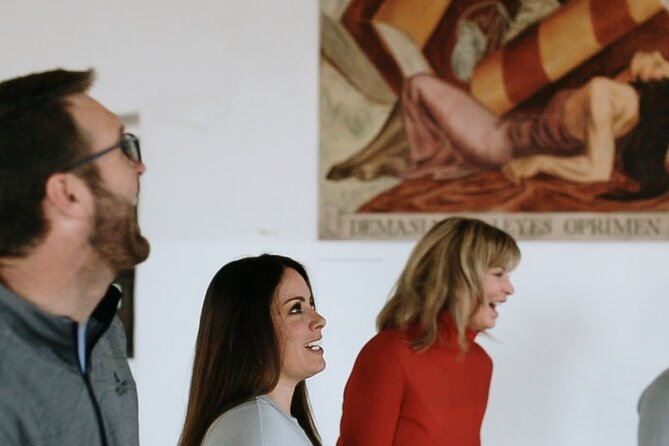
The final major art stop is Tres Estrellas Design, with about 20 minutes on site. Admission is listed as free here, and you’ll meet owners Chris and Carla. The tour frames this as an in-depth experience focused on native textiles of the northern New Mexico and Mexican traditions.
The standout part is the context they give you—specifically the story of Rio Grande Blankets and the role of churro sheep introduced as weaving material. That sort of detail matters because textile traditions aren’t just about designs; they’re about farming, fiber, dye, and time.
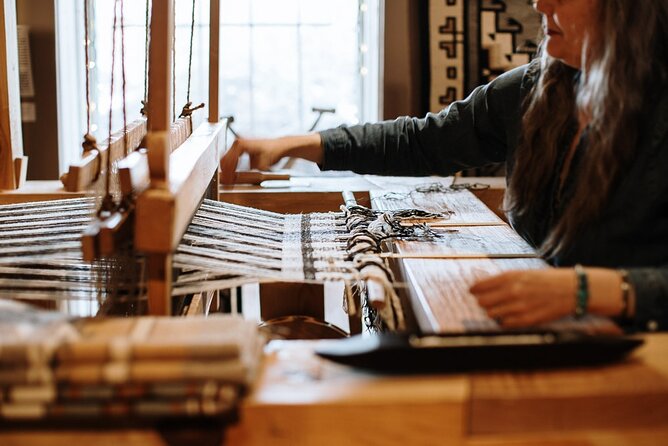
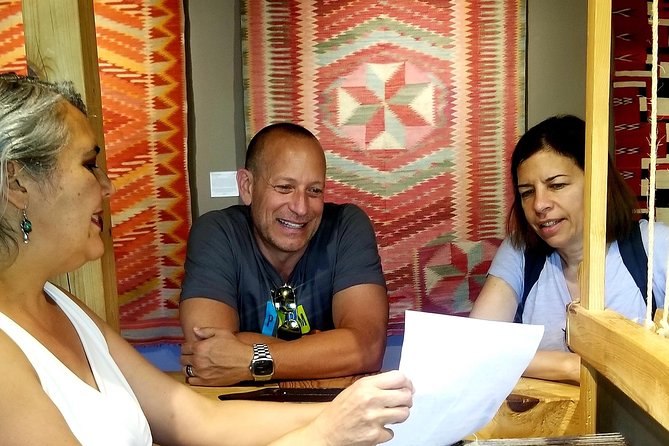
Then you’ll watch a weaving demo by Carla, who shares handwoven shawls and blankets using hand-died yarns inspired by the native textiles of the Taos region. Even if you’ve never studied weaving before, you’ll leave with a better sense of what makes these pieces feel distinct: the materials, the color work, and the way the craft is treated as knowledge passed along.
Small warning: this stop is shorter than the museum stops, so your best move is to choose one or two things you want to understand—like how yarn is prepared, or how designs are chosen—then let the guide help you. A short demo goes fast.
The included chocolate elixir: a sweet finish with a practical purpose
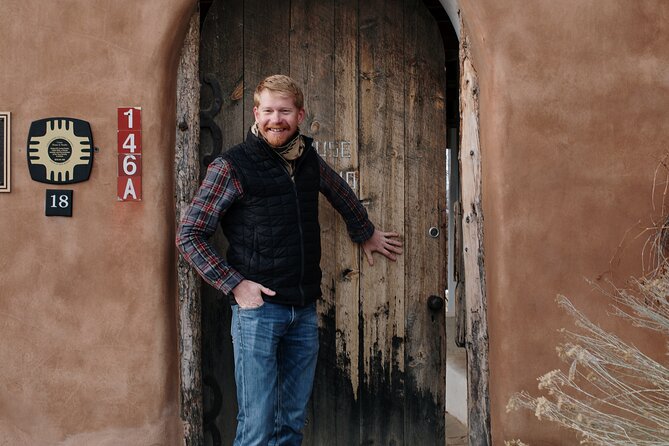
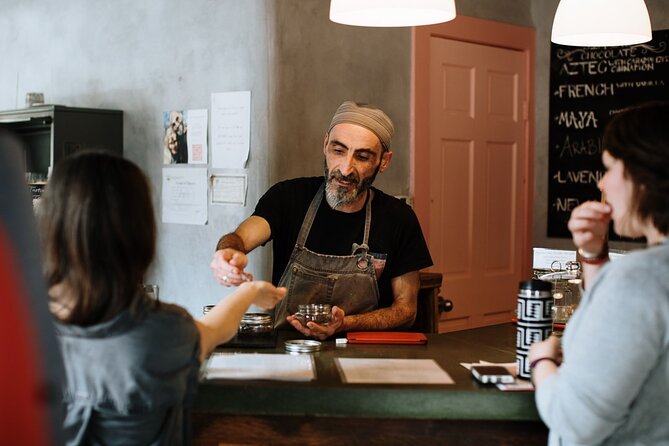
The tour includes hot or cold sipping chocolate elixir. In other words, you’re not getting a tiny sample meant to check a box. You’re getting something you can actually taste as part of the tour rhythm.
I also like that it’s paired with art rather than tossed on at the end. Chocolate gives you a sensory break, and that matters because you’ll have just taken in multiple visual spaces—historic site, studio museum, Plaza frescoes, then a textile talk. A sip resets your attention so you can absorb the connections the guide is making.
What you should bring: a willingness to pause. In a short 3-hour walk, the chocolate moment can feel rushed if you’re thinking about the next stop the whole time. Let it be the calm checkpoint.
Price and value: what $145 is really paying for
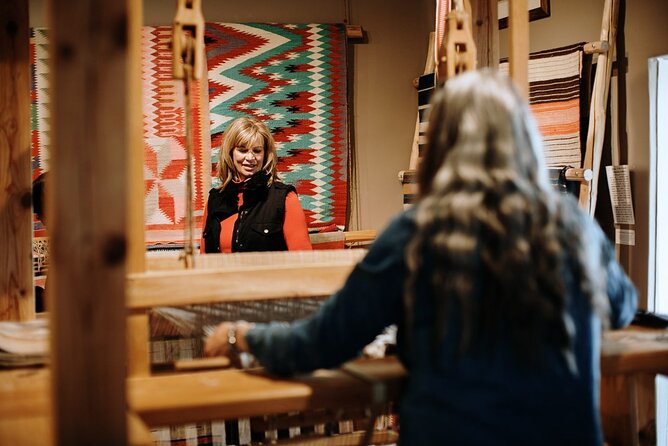
At $145 per person for about 3 hours, this is not a bargain-bin group tour. One review described it as over priced, with the sense that you could do part of it on your own. That’s a fair question.
Here’s the value case for you:
- Included admissions at two stops can change the math. If you were to visit those places separately, you’d be paying entry while also figuring out how to interpret what you’re seeing.
- A guide who ties it together matters more than people expect. The biggest win here is that the stops relate to each other through the Taos Artist Society and the continued craft traditions.
- A small maximum group size (2 travelers) can make the experience feel less like a script and more like a conversation. That can be worth a premium if you like asking questions.
The risk is also clear: if you’re expecting the kind of day where you can casually wander, spend extra time at one museum, and treat everything as flexible, you might feel constrained by the planned stops. And if there’s a substitution at a museum/studio, the value depends on how closely the replacement matches what you were most excited to see.
My advice: if you’re the type who likes to understand art context—who made it, why, and how it lives on—this price usually makes sense. If you mostly want scenic walking and don’t care about the artist connections, you may feel like you could DIY it cheaper.
Who should book this Taos walking tour—and who should skip
This tour is a strong match if you:
- want a guided art-and-history route in a compact area
- like meeting working artisans and hearing process-focused talk
- care about how Taos shaped American art through communities like the Taos Artist Society
- want a craft-focused stop where textile material stories (like fiber and dye) are part of the explanation
You might skip it if you:
- prefer free-form self-guided museum time where you can linger
- don’t enjoy museum/studio interpretation and would rather just browse
- are extremely price sensitive for a 3-hour experience
Final call: should you book Taos Artisan Walking Tour + Chocolate?
If you’re going to Taos for the art story—and you want that story explained while you walk—this is a smart use of a few hours. The combination of historic sites, Plaza frescoes, studio access, textile knowledge, and an included sipping chocolate elixir creates a smoother learning arc than doing it alone.
But be honest with yourself about what you want from the money. The $145 price is paying for access and interpretation, not just for places you can look at from the sidewalk. If you’d rather wander without structure, plan your own route. If you want a guided thread that connects it all, book it and bring a couple of good questions.