REVIEW · HO CHI MINH CITY
Bean to bar Chocolate Workshop in Ho Chi Minh City
Book on Viator →Operated by Ban Cacao - Vietnamese chocolate maker · Bookable on Viator
Cacao turns into chocolate fast. This bean-to-bar workshop at Ban Cacao in District 1 teaches the full pods-to-bars process, from choosing cacao beans to finishing a bar you decorate yourself. I love that it stays hands-on, not just talk.
You also get a practical feel for Vietnamese cacao—tasting fresh pods early, then husking and grinding your own beans with a granite stone mortar. One possible drawback: the grinding part takes real effort, so it may be slow or tiring if you’re bringing younger kids.
The class runs about 2 hours in a small group (up to 10), and you’ll leave with the chocolate you made plus your own wrapper design. It’s a mobile-ticket experience, set up for an easy start near public transport in central Ho Chi Minh City.
In This Review
- Key things you’ll remember
- Why a bean-to-bar class in Saigon beats the usual chocolate stop
- Finding Ban Cacao in District 1 and what the 2-hour format means
- Tasting cacao pods, then learning what you’re working with
- Husking cacao beans: messy, real, and oddly satisfying
- Grinding cacao paste the traditional way with granite
- Making your chocolate bar: from cacao paste to a finished, decorated take-home
- The included chocolate drink (hot or iced) and why it helps
- Price and value: is $32 worth it?
- Who should book this workshop (and who might want a different plan)
- Practical tips to get more out of your chocolate-making session
- Should you book the Bean to Bar Chocolate Workshop in Ho Chi Minh City?
- FAQ
- How long is the bean-to-bar chocolate workshop in Ho Chi Minh City?
- Where does the workshop take place?
- How much does it cost?
- Is the class a small group experience?
- What’s included in the workshop besides making chocolate?
- Do I get to taste cacao during the workshop?
- What tools and materials are used for making the chocolate bar?
- Do I take chocolate home after the class?
- Is there a drink included?
- Do I receive confirmation at booking?
Key things you’ll remember
- Pods-to-bars, step-by-step: you learn how cacao becomes a finished bar, not just the final product
- Fresh cacao tasting: you sample the pods early, before you start processing
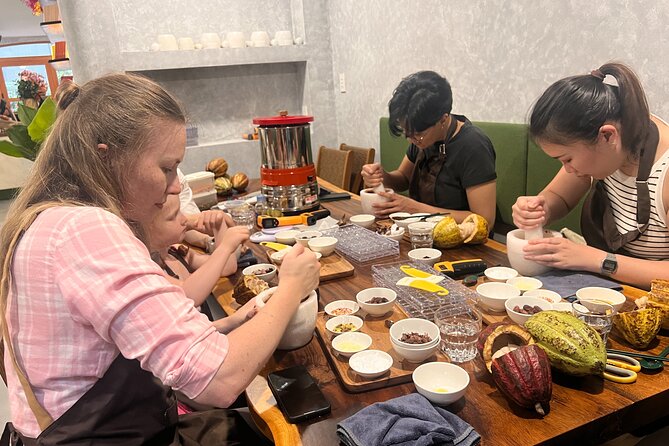
- Traditional grinding with granite: you work with a real granite mortar and get a feel for paste-making
- Make-and-take chocolate: you create the bar from scratch and take it home
- Small group size (max 10): more hands-on time, less waiting around
- Hot or iced chocolate included: a simple perk that keeps energy up during the work
Why a bean-to-bar class in Saigon beats the usual chocolate stop
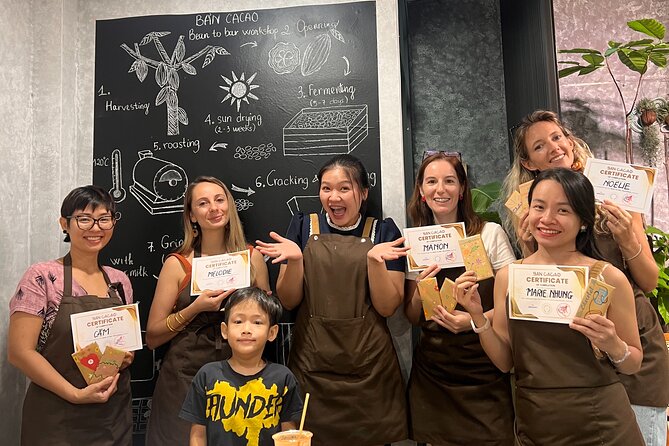
Ho Chi Minh City is packed with things to do, but most chocolate experiences end at tasting. This one starts earlier—at the pods and beans—so the story actually has texture. You learn what matters in cacao before you ever melt or mix anything.
I like that the workshop frames chocolate as a process with a Vietnam angle. They explain how the Vietnamese make chocolate from local ingredients, and they walk you through cacao’s path from pod to finished bar. That context makes the hands-on work feel purposeful, not random.
Then there’s the practical payoff: you don’t just watch. You do the husking, grinding, and bar-making steps yourself. When you can taste what you made—after seeing the whole chain—you remember it longer.
Finding Ban Cacao in District 1 and what the 2-hour format means
The workshop meets at Ban Cacao’s store at 89/14 Hàm Nghi, Phường Nguyễn Thái Bình, Quận 1. It’s in central District 1, close to public transportation, which matters because you don’t want your best activity to turn into a timing puzzle.
The session lasts about 2 hours. That’s a sweet spot for hands-on work: long enough to go through multiple stages, but short enough that you’re not spending half your day stuck indoors. You’ll also be in a group capped at 10 people, which usually translates into more attention while you’re working with tools.
Expect a steady rhythm: instructions, tasting, active steps, then finishing and decorating. It’s the kind of structure that works well even if you’re doing it solo, with friends, or with kids who can handle attention for two hours.
Tasting cacao pods, then learning what you’re working with
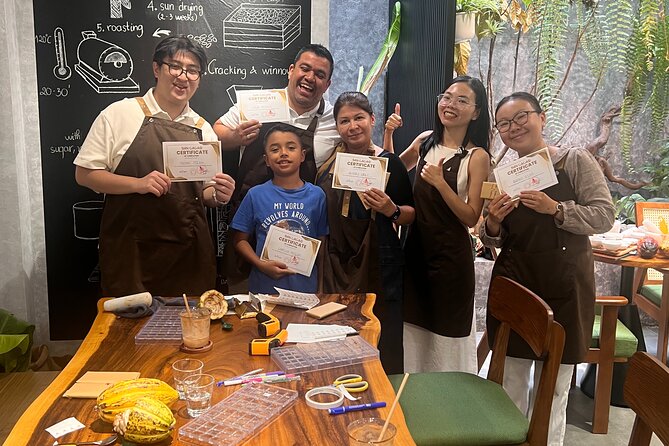
The first real wow moment is tasting fresh cacao pods. Before chocolate is sweet or smooth, cacao has a very different character. That early taste helps you understand why the later steps matter—how flavors shift once you husk, process, and turn cacao into paste.
After that, you move into the basics of selecting and working with cacao. The class explains the pods-to-bars process and the history of cacao in Vietnam, plus how Vietnamese makers use local ingredients. Even if you don’t plan to become a chocolatier, it’s useful knowledge. It answers the question people always ask: why cacao from one place can taste different.
This part also gives you a mental map. Once you know what you’re starting with, you’re better able to follow each later step—especially when you’re doing it with your hands.
Husking cacao beans: messy, real, and oddly satisfying
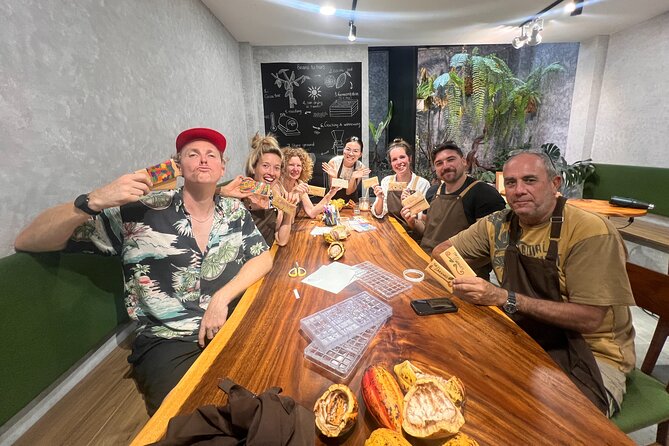
Husking cacao beans is one of those tasks that feels simple until you do it. You’re taking the beans out and getting ready for the paste stage. It’s hands-on work, and it can be a little involved depending on how many steps your instructor has you do.
I like this because it breaks the “chocolate is just chocolate” mindset. You get to handle the ingredients at the level that most people never touch. And since the workshop is designed around the full process, this isn’t filler time—it’s a real step in making cacao paste.
Also, husking builds momentum. Once you’ve opened the cacao up and see the beans, the rest starts to make more sense. You’ll be more patient when it’s time for grinding.
Grinding cacao paste the traditional way with granite
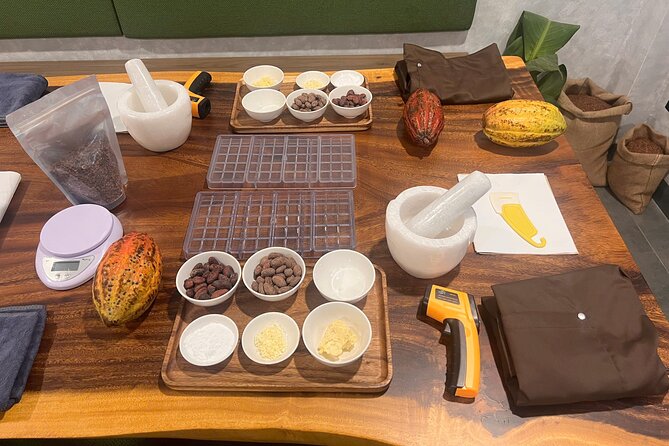
Here’s the part that people talk about, and for good reason: making cacao paste using a granite mortar. You grind cacao in a traditional style, and you use tools like a thermometer and scale as you move through preparation.
Grinding is tiring. A review-based tip that really matters: it can be quite tiring for kids, which is why the experience is best for children over 8 (at least for a comfortable pace). If you’re going with a younger child, they might still enjoy it, but expect it to be slow and a bit harder going.
Even so, this step is the workshop’s heart. It’s also where you learn the difference between having cacao on the table and actually turning it into workable paste. That transformation is what makes the later bar-making feel like craft, not magic.
And yes, the effort is worth it. When you finally taste the result, you’ll recognize the work you put in—because you were there when the paste became possible.
Making your chocolate bar: from cacao paste to a finished, decorated take-home
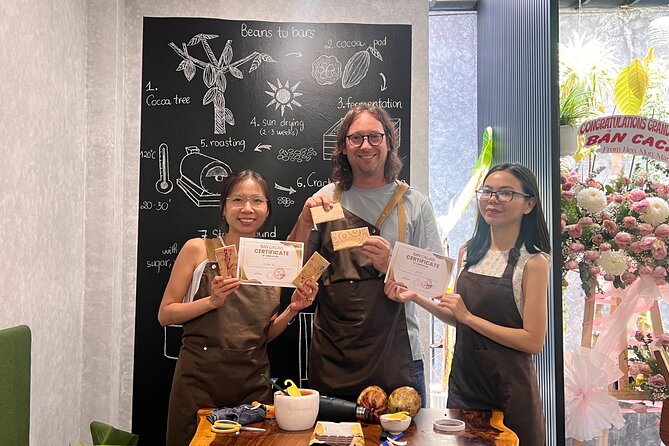
After husking and grinding, the workshop moves into bar-making. You work through the steps to turn cacao paste into a finished chocolate bar, using ingredients like:
- Cacao nibs
- Cacao butter
- Cane sugar
- the cacao you prepared earlier
You’ll also use a chocolate mold and wrapping paper, then decorate your own chocolate. The tool setup is part of the value: you’re not just decorating. You’re actually participating in the sequence that gets you to the bar.
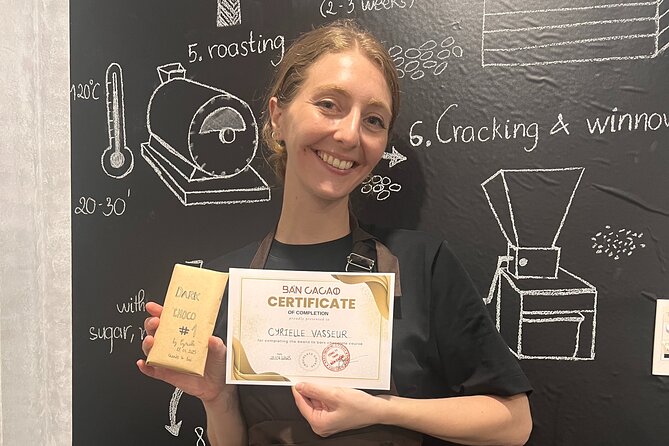
The decorating step is where your final creation becomes personal. You can choose how your wrapper looks, and the end result feels like a real souvenir because it’s made by your hands, not purchased from a shelf.
One more practical bonus: many people love the whole “work then reward” flow here. You work through the steps, take a break with a drink, then finish with something you can eat right away.
The included chocolate drink (hot or iced) and why it helps
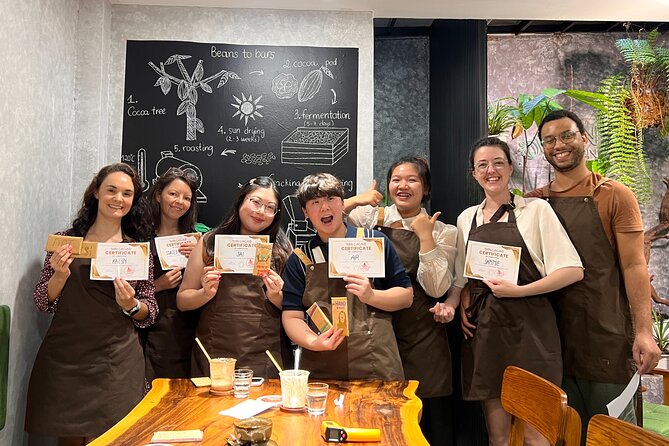
The class includes a drink each—hot or iced chocolate. That’s more than a nice touch. When you’re grinding and doing hands-on work, a warm or cool chocolate drink helps reset your energy and makes the session feel like a complete experience, not just a workshop.
It also helps families. If you’re doing this with kids who need a little motivation, having the drink during class makes the session easier to stick with until the final bar is ready.
Price and value: is $32 worth it?
At $32 per person, this workshop is a straightforward “pay for skill + ingredients + take-home chocolate” deal. If you’ve ever done tastings where you pay and then leave with only a small sample, this is different.
Here’s what you’re actually getting for the price:
- Two hours of guided, step-by-step production
- Real participation in husking, grinding, and bar-making
- Tasting fresh cacao pods
- A included hot or iced chocolate drink
- A finished chocolate bar you can take home, plus decoration and wrapping
You’re paying for access to a working process and tools—especially the granite mortar and the full transformation from cacao to bar. For many people, the “take-home” part is what justifies the cost. You’re leaving with something edible and personal, not just knowledge.
Also, group size matters. With a maximum of 10, you’re more likely to get time at the steps that require handling ingredients and tools.
Who should book this workshop (and who might want a different plan)
This workshop fits best if you like food that has a story you can touch. You’ll enjoy it if you:
- like hands-on activities
- want a break from the usual sightseeing loop
- enjoy learning processes, not just tasting products
- are traveling with kids who can participate for about two hours
It’s especially family-friendly for children over 8 because the process includes grinding that’s a bit tiring. If your child is younger, you might still do it, but plan for more patience and slower pace.
Solo travelers also do well here. The group is small, and the steps naturally give you something to do while the instructor explains what’s next.
If you’re only looking for a quick chocolate snack, then this may feel like more work than you want. But if you like the idea of making the bar yourself, it’s a strong pick.
Practical tips to get more out of your chocolate-making session
A few things will make your 2 hours smoother:
- Wear clothes you don’t mind getting a bit cacao-dusty. You’ll be handling fresh cacao and working the paste stage.
- Expect manual effort at the grinding step. If you’re sensitive to strenuous tasks, go in knowing it’s part of the tradition.
- Listen closely during the early cacao tasting and bean steps. Those parts set up how you understand the final bar flavors.
- Save energy for finishing and decorating. The last steps are where you turn process into something you’ll want to take home and show off.
- Plan your timing in the city. District 1 is easy to reach, but you’ll still want enough buffer time before/after so you’re not rushing.
Should you book the Bean to Bar Chocolate Workshop in Ho Chi Minh City?
Yes—if you want a hands-on, practical food experience in Ho Chi Minh City. For $32, you get a full pods-to-bars process, fresh cacao tasting, traditional granite grinding, and a decorated chocolate bar you take home. The small group size and included drink make the whole session feel thoughtful, not rushed.
Skip it only if you want a low-effort activity or you’re bringing very young kids who may struggle with the grind-and-work pace.
If you’re choosing one “different” thing to do in Saigon that’s still fun, this is the kind of workshop that delivers more than a souvenir. You leave with chocolate plus the story of how it became real.
FAQ
How long is the bean-to-bar chocolate workshop in Ho Chi Minh City?
The class runs for about 2 hours.
Where does the workshop take place?
It happens at Ban Cacao, at 89/14 Hàm Nghi, Phường Nguyễn Thái Bình, Quận 1, Thành phố Hồ Chí Minh, Vietnam.
How much does it cost?
The price is $32.00 per person.
Is the class a small group experience?
Yes. The workshop has a maximum of 10 travelers.
What’s included in the workshop besides making chocolate?
The workshop includes explanations of the pods-to-bars process and cacao in Vietnam, tasting fresh cacao pods, husking cacao beans, making cacao paste with a granite mortar, and making and decorating your own chocolate bar.
Do I get to taste cacao during the workshop?
Yes. You’ll taste the fresh cacao pods as part of the class.
What tools and materials are used for making the chocolate bar?
Tools include a granite mortar, thermometer, scale, chocolate mold, and wrapping paper. Materials include fresh cacao fruits, cacao beans, cacao nibs, cacao butter, and cane sugar.
Do I take chocolate home after the class?
Yes. You make your own chocolate bar and can take it home after decorating it and wrapping it.
Is there a drink included?
Yes. The class includes a drink each, with hot or iced chocolate.
Do I receive confirmation at booking?
Yes. Confirmation is received at the time of booking.