REVIEW · GHENT
Discover authentic Ghent with historian & taste the best chocolate
Book on Viator →Operated by Guide in Ghent · Bookable on Viator
Ghent can feel like a puzzle with missing pieces. This walk makes it click by pairing city history with a chocolate stop, then pointing out the clues right in the streets and buildings. I especially liked how Wim, a historian and teacher who knows Ghent well, starts at Sint-Baafsplein and uses the square to explain the city’s economic, political, cultural, and religious story.
You’ll also get a smart guided pass through big-picture landmarks, like St. Bavo’s Cathedral, where you circle the building and its art treasures without turning it into a long museum session. My one real consideration: the chocolate is a short taste inside a broader history walk, not a long dessert break.
In This Review
- Key Things You’ll Do and Notice on This Ghent Tour
- From Sint-Baafsplein to Stories That Actually Fit Together
- St. Bavo’s Cathedral: Art Treasure Meets Building Clues
- Maaseikplein and the Van Eyck Brothers Moment
- The Scheldt, Geeraard de Duivelsteen, and a Little Wicked Theater
- Hoogpoort and the 13th-Century Streets You Can Still Read
- Ghent Town Hall (Stadhuis): Emperor Charles V and a Nickname
- Stadshal: The Contested Building With a Local Nickname
- Korenmarkt and the 800 Years of Small Clues
- Het Groot Vleeshuis: Meat Quality Before Refrigeration
- Gravensteen: A Fist to the Inhabitants
- St. Veerleplein: Neptune, Seahorses, and Strange Dolphins
- Graslei and Korenlei: Why the Harbor Is a Highlight
- Chocolate on the Walk: A Taste, Not a Long Dessert Trip
- Price and Value: Why $42.05 Feels Reasonable Here
- The Pace, Group Size, and Logistics That Actually Matter
- Should You Book This Ghent History and Chocolate Walk?
- FAQ
- How long is the Ghent tour?
- What does it cost per person?
- Is the tour offered in English?
- What is the maximum group size?
- Where do I meet the guide in Ghent?
- Where does the tour end?
- Do I get a mobile ticket?
- Are there admission fees for the stops?
- Is the tour suitable for most travelers, and are service animals allowed?
- Can I cancel and get a full refund?
Key Things You’ll Do and Notice on This Ghent Tour
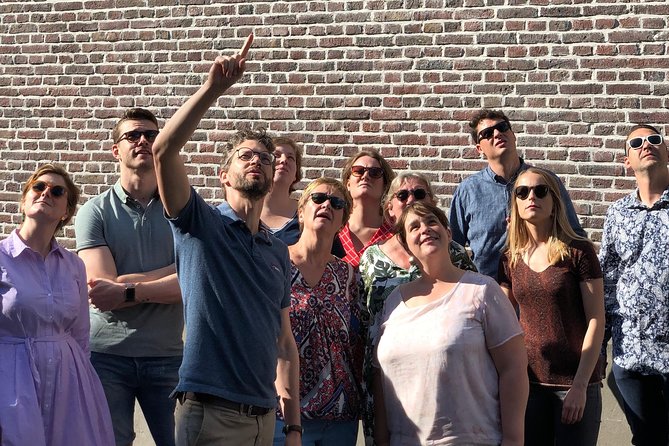
- Start at Sint-Baafsplein and read Ghent’s story in one central square
- Walk around St. Bavo’s Cathedral and learn what shaped the building and its art
- Follow the “villains” and myths from Geeraard de Duivelsteen to symbols on the bridges and squares
- Spot details on Korenmarkt and other 13th-century spots that you’d miss on your own
- See how the city ran without modern life support at the Het Groot Vleeshuis meat hall
From Sint-Baafsplein to Stories That Actually Fit Together
Your tour starts in the middle of Sint-Baafsplein, in front of the white statue. The first part is the kind of orientation that saves you time later. You get a general introduction to Ghent, then Wim zooms in on how the city’s economic, political, cultural, and religious history shows up in the square itself.
This is a smart way to begin because Ghent can look “just medieval” if you don’t know what powered it. The square becomes your map. Instead of random sightseeing photos, you’re collecting themes—power, trade, faith, and civic life—and you’ll keep seeing those themes repeat at the stops that follow.
If you like history that explains why buildings exist (not just when they were built), you’ll feel right at home here.
You can also read our reviews of more tours and experiences in Ghent.



St. Bavo’s Cathedral: Art Treasure Meets Building Clues
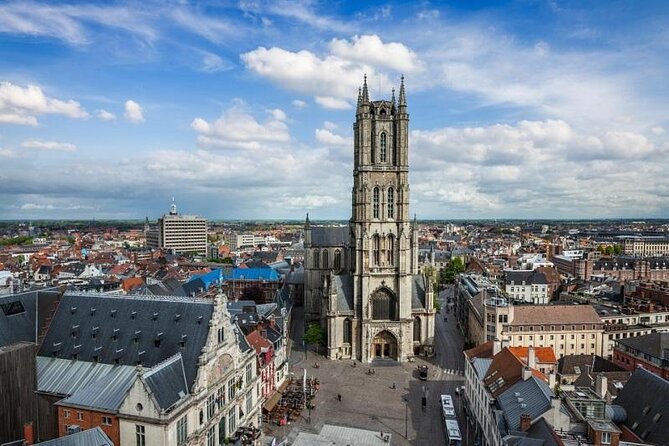
After you’ve set the stage, you move to St. Bavo’s Cathedral and walk around it. You’re not rushing inside with a checklist. You’re getting the building history, plus guidance on its major art treasure, so you know what you’re looking at and why it matters.
This stop works well even if you’re not the type to enjoy long interiors. The tour focuses on what the cathedral represents for Ghent, and how its story connects back to what you heard at Sint-Baafsplein. In practice, it keeps you from getting lost in details you didn’t ask for.
Maaseikplein and the Van Eyck Brothers Moment
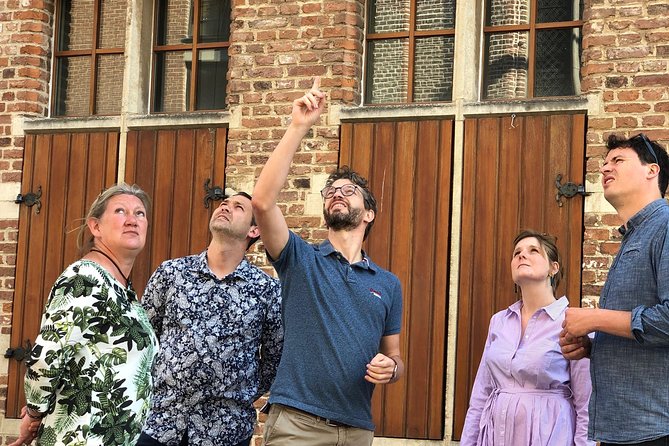
At Maaseikplein, the guide nudges you to compare what you see with the Van Eyck brothers. That quick question-and-look approach is a great reset after the cathedral. It also gives you a reminder that Ghent’s fame isn’t only about architecture—it’s also tied to people and artistic identity.
This stop is brief, but it’s one of those “I didn’t notice that before” moments. Even if you’re not a specialist, it helps you make sense of why the city is mentioned so often in European art conversations.
The Scheldt, Geeraard de Duivelsteen, and a Little Wicked Theater
Next comes Geeraard de Duivelsteen, also called the Castle of Gerald the Devil. The tour frames it as a meeting point for villains—Vikings and Geeraard De Duivel—so you’re listening for the mix of legend and local identity.
You’ll also connect it to the Scheldt, which matters because waterways shaped Ghent’s wealth and movement. Even in a short stop, Wim ties the story to the geography so it feels less like a disconnected myth and more like part of how the city thought about itself.
Hoogpoort and the 13th-Century Streets You Can Still Read
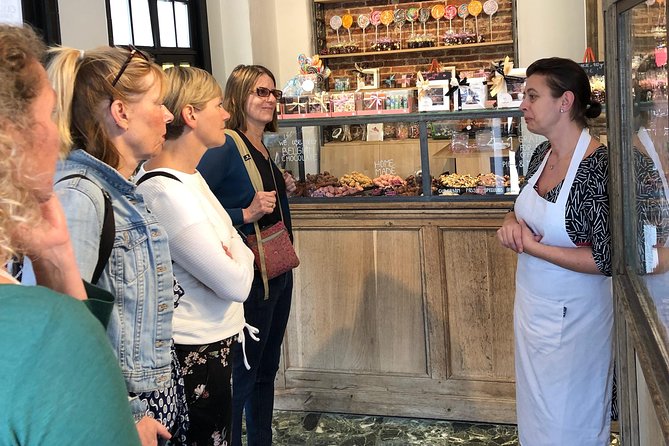
At Hoogpoort, you spend time reflecting on ancient buildings dating back to the 13th century. This is where you practice a simple travel skill: slowing down just enough to see the age in the structures.
When a guide points out what you should look for, the street stops being a corridor and turns into a timeline. The buildings here aren’t just pretty—they’re proof that Ghent kept building, adapting, and reusing space over centuries.





Ghent Town Hall (Stadhuis): Emperor Charles V and a Nickname
The tour then moves to Ghent Town Hall (Stadhuis), a focal point for civic power. Wim explains why it was built over centuries and connects the building to a key historical conflict involving Emperor Charles V.
Here’s the detail I think you’ll remember: the Ghentenaars revolted, and you’ll hear how that connects to the nickname noose bearers. It’s the kind of story that makes a city feel like a place with real arguments, real consequences, and real pride—not just stonework.
Stadshal: The Contested Building With a Local Nickname
At Stadshal, you learn about the city’s most contested building and its nickname. You don’t just hear the facts; you get the angle of why people fought over it.
Short stop, big payoff. This is one of those places where a guide’s explanation turns a building into a political object—something people cared about because it affected rules, power, and everyday control.
Korenmarkt and the 800 Years of Small Clues
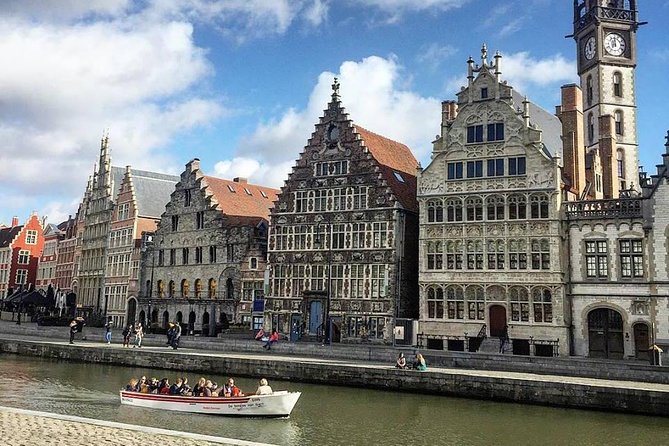
Next is Korenmarkt, where the houses are said to carry around 800 years of history. The tour point is practical: some have mysterious inscriptions, and Wim helps you notice what those details can mean.
This stop is ideal if you like scavenger-hunt travel. On your own, you might walk past without reading much. With a guide, you learn what’s worth your attention and what’s just decoration.
Het Groot Vleeshuis: Meat Quality Before Refrigeration
At Het Groot Vleeshuis, the tour explains how the city guaranteed meat quality in a time without modern refrigeration. The answer is surprisingly logical: butchers worked together in one building.
That detail matters because it shows a working system, not just architecture. You’re learning how Ghent solved problems through organization and shared space. It’s the kind of practical medieval thinking that makes the city feel alive.
Gravensteen: A Fist to the Inhabitants
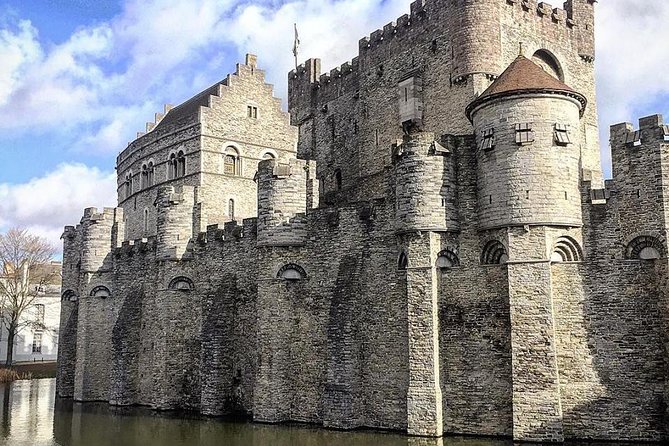
The walk continues to Gravensteen, where the count of Flanders built a small castle to show a fist to the inhabitants of Ghent. Even if you only catch part of the structure, the story gives it meaning immediately.
This stop is also a nice bridge between civic buildings and the city’s defenses. You start to see how power wasn’t only ceremonial. It was enforced through walls, control, and the ability to pressure a population.
St. Veerleplein: Neptune, Seahorses, and Strange Dolphins
At St. Veerleplein, you’ll search for Neptune, seahorses, and strange dolphins. This is the lighter side of the tour, but it’s not random. It ties back to the city’s relationship with water—myth and symbolism sitting right where people walk every day.
It’s also a fun pause. After the political stories, you get a chance to look and play along with the guide’s cues.
Graslei and Korenlei: Why the Harbor Is a Highlight
Many people consider the stop at Graslei and Korenlei the highlight, and I get it. This harbor area is where the city’s centuries of skippers and trading energy feel most visible. You’re not just looking at water—you’re seeing a place built for commerce, movement, and social life.
The tour keeps this stop short, so don’t plan to linger too long on the first pass. But it sets you up perfectly to return later on your own for extra photos and a slower sit-down.
Chocolate on the Walk: A Taste, Not a Long Dessert Trip
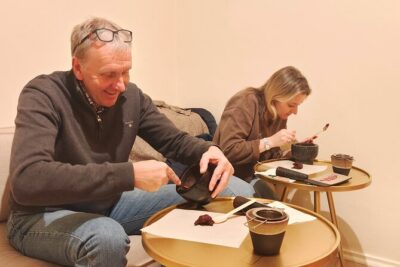
The experience is branded around tasting the best chocolate, and you do get chocolate as part of the route. Still, pay attention to what you want from it. One strong note from the tour’s feedback is that the chocolate time can feel brief, closer to a small refresher than an extended sweet break.
So, if your goal is to spend most of the tour eating desserts, this likely won’t match your expectations. If your goal is to learn Ghent deeply and just enjoy a chocolate moment along the way, it fits well.
Price and Value: Why $42.05 Feels Reasonable Here
At $42.05 per person for about 2 hours, this is priced like a guided city walk with a real expert at the front. You’re not only getting stories; you’re getting a tight route through major places in central Ghent, with free admission listed for the stops.
That matters for value. When entrances are included at no extra charge, you avoid the common “nickel-and-dime” feeling that turns a great guide into a time sink of ticket lines. Plus, the group size is capped at 15, which usually helps the pace stay organized.
And because it’s booked about 24 days in advance on average, it’s smart to reserve early if you’re traveling at a busy time.
The Pace, Group Size, and Logistics That Actually Matter
The whole experience moves in short segments, typically around a few minutes at each stop, with longer moments where the guide needs to set context. That style works well for first-timers because you see a lot of the city center without getting stuck repeating yourself.
It’s also in English, which makes a big difference if you don’t want to rely on translation apps. And you’ll use a mobile ticket, which keeps things simple on the day.
You’ll start at Sint-Baafsplein and finish at Saint Michael’s Bridge (Saint-Michielshelling). That means you end in a walkable area where you can keep exploring right away.
Should You Book This Ghent History and Chocolate Walk?
Book it if you want a practical, guided way to understand Ghent’s medieval layout and political identity while enjoying a chocolate taste along the route. I like it for short trips because it hits the key civic, religious, and harbor-related storylines without wasting time.
Skip it if chocolate is your main goal and you want a long, dedicated tasting session. This is still a history-first walk, with chocolate as a sweet stop in the middle—not the main event.
Also, pick this tour when you feel okay with a set meeting point. Tours work best when you arrive on time and check the exact starting spot in Sint-Baafsplein.
FAQ
How long is the Ghent tour?
It runs for about 2 hours.
What does it cost per person?
The price is $42.05 per person.
Is the tour offered in English?
Yes, it’s offered in English.
What is the maximum group size?
The tour has a maximum of 15 travelers.
Where do I meet the guide in Ghent?
You meet in front of the white statue in the middle of Sint-Baafsplein (9000 Gent, Belgium).
Where does the tour end?
It ends at Saint Michael’s Bridge (Saint-Michielshelling, 9000 Gent, Belgium).
Do I get a mobile ticket?
Yes, it uses a mobile ticket.
Are there admission fees for the stops?
Admission tickets are listed as free for the stops included in the tour.
Is the tour suitable for most travelers, and are service animals allowed?
Most travelers can participate, and service animals are allowed.
Can I cancel and get a full refund?
Yes. You can cancel up to 24 hours in advance for a full refund.