REVIEW · YEREVAN
Group Tour: Hovhannavank, Saghmosavank, Chocolate House, Aghtsk
Book on Viator →Operated by Hyur Service · Bookable on Viator
Stone churches. Sweet stops. One tidy half-day plan.
This is a great first-time Yerevan-area outing because you knock out four very different stops—ancient monasteries, a near-miss view of canyon scenery, and a real chocolate-making experience.
I like that all entrance fees are included, and the day doesn’t drag: you’re moving on a steady schedule with a pro guide and built-in snack breaks.
One more thing I really appreciate is the guide setup—English is supported, and you’ll hear the story behind each church (not just dates on a wall).
A possible drawback: because guides work English + Russian consecutively, you may feel some waiting if the group size and language mix don’t line up with how you like to tour.
In This Review
- Key highlights worth aiming for
- A 10:00 start from Hyur Service: how the day actually flows
- Hovhannavank: John the Baptist and 5th-century Armenian stone
- Saghmosavank on the Kasakh canyon edge: manuscripts and rebuilding after 1988
- Karmravor Church in Ashtarak: the 7th-century monolith effect
- Gourmet Dourme mini chocolate museum: watching production and tasting
- Aghtsk Arshakid mausoleum: pagan-Christian symbolism in one small hall
- Tour value: what you’re really paying for at $29
- Guide and group dynamics: when bilingual info helps or slows
- Practical tips for monastery-hopping without getting grumpy
- Should you book this tour?
- FAQ
- What is the duration of the tour?
- Where do we meet, and what time does it start?
- Are entrance fees included?
- What’s included in the price besides tickets?
- Is lunch included?
- How long is the chocolate museum visit?
- How big is the group?
- Does the tour run in bad weather?
Key highlights worth aiming for
- All entrance fees included, so you don’t have to budget for tickets mid-day.
- Snacks, beverages, bottled water, and pastries keep you comfortable between sites.
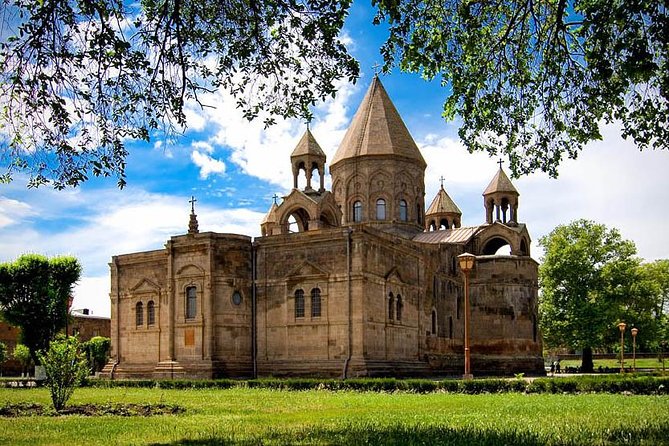
- Hovhannavank’s John the Baptist connection plus 5th-century architecture makes the first stop strong.
- Saghmosavank’s scriptorium tradition gives context to what you’re seeing beyond the buildings.
- Gourmet Dourme mini chocolate museum lets you watch production through a transparent window and then taste.
- Aghtsk’s mausoleum art mixes pagan and Christian symbols—an unusual find near Yerevan.
A 10:00 start from Hyur Service: how the day actually flows
The tour starts at 10:00 am at Hyur Service, 96 Nalbandyan poxoc in central Yerevan, and you return to the same meeting point.
It runs about 5 to 6 hours, which means you’re out long enough to feel you did something real, not so long that your day evaporates.
Transport is handled in an air-conditioned vehicle, and you get WiFi onboard plus vehicle & passenger insurance.
Because there’s no hotel pick-up, you’ll want to make sure you can reach the meeting point easily (it’s near public transportation).
Hovhannavank: John the Baptist and 5th-century Armenian stone
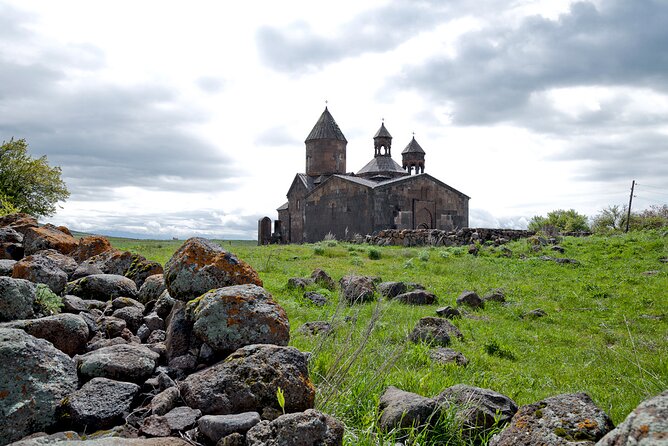
Your first main site is Hovhannavank Monastery, associated with John the Baptist.
The oldest church here is a one-naved basilica built in the 5th century, so you’re looking at early Armenian Christian architecture, not a reconstruction fantasy.
By the 13th century, Vachutian dukes added new buildings, which helps explain why the complex feels layered instead of one-note.
One detail worth paying attention to is the portal of the main church: it’s decorated with evangelical motifs, and it’s the kind of carved stone that’s easy to miss if you only snap photos and move on.
Practical note: the visit window is short (about 40 minutes), so go in with a simple goal—pick one main facade to study, then let your guide point out the key carvings.
Saghmosavank on the Kasakh canyon edge: manuscripts and rebuilding after 1988
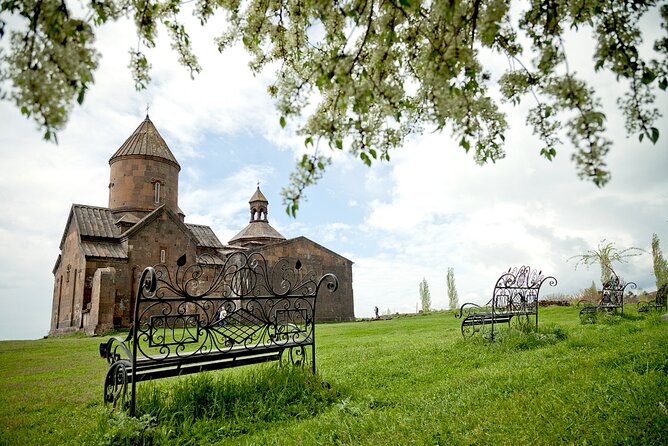
Next up is Saghmosavank Monastery, about 5 km from Hovhannavank, perched on the edge of the Kasakh river canyon.
In the 13th century, the Vachutian dukes also built Saghmosavank, but this place adds a different angle: the main church is adjacent to a scriptorium, where manuscripts were produced over centuries.
If you care about how cultures actually preserved knowledge, this is a strong stop.
The earthquake in 1988 caused major damage, and reconstruction finished in 2000, which means the site you see now is the result of recovery—not abandonment.
Expect around 40 minutes here, enough time to see the church and get the story behind the scriptorium idea.
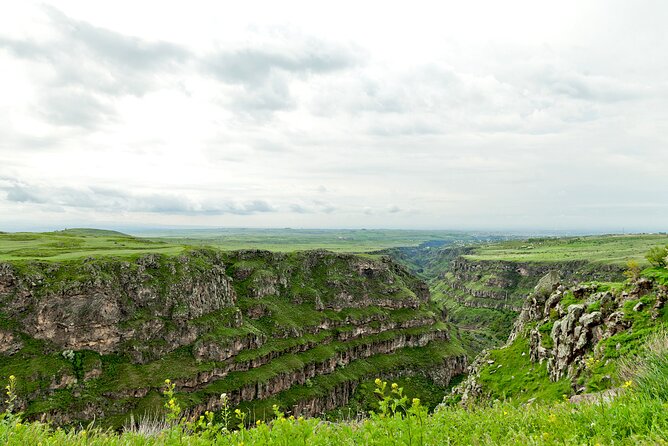
And if the weather is clear, the canyon setting gives you an immediate sense of why monasteries were placed where they were: peace, distance, and a dramatic backdrop.
Karmravor Church in Ashtarak: the 7th-century monolith effect
Then you reach Karmravor Church, often described as the jewel of Ashtarak.
It was built in the 7th century and has come down to today almost intact, which is rare enough to matter.
What I’d watch for is the “monolith” feeling: the church is small, but its architecture makes it look solid and weighty, like a single stone statement.
The plan is cross-shaped both inside and outside, so even if you only glance around quickly, you can still read the church’s form.
This stop is a compact 15 minutes, so it’s more of a visual checkpoint than a long sit-and-stare.
Still, it works well after Saghmosavank because it gives you a different shape and different design priorities—less canyon drama, more pure church geometry.
Gourmet Dourme mini chocolate museum: watching production and tasting
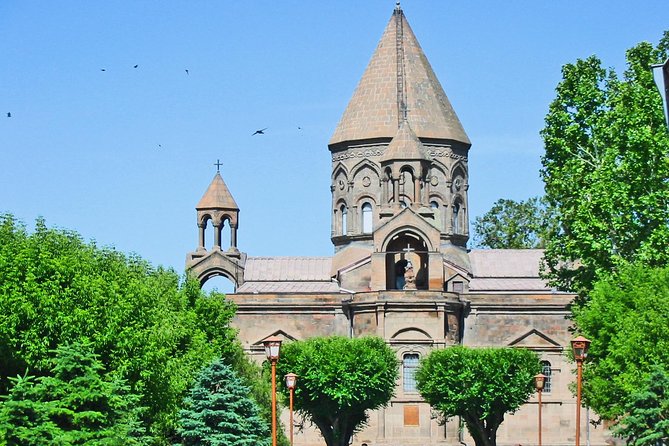
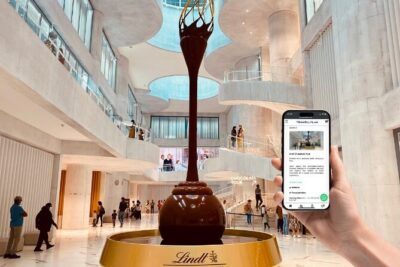
Now for something fun: a Gourmet Dourme Mini Chocolate Museum visit in Ashtarak.
It’s tied to the Armenian chocolate brand Gourmet Dourme, founded in 2007 by Pierre and Diran Bagdadians (two brothers from France and Austria).
The name mixes meanings: gourmet from the French side and dourme as the chocolate-rooted word.
The visit lasts about 30–40 minutes, and the format is simple and engaging.
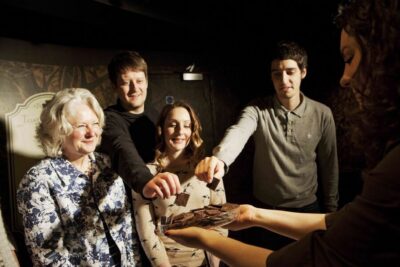
You watch the production process from behind a transparent window, then you get a chocolate tasting afterward, plus an audio version covering chocolate history and the making stages.
This is one of the best “break from stone” moments in the day.
Also, if you’re traveling with kids or anyone who gets museum-fatigued, the chocolate stop gives the itinerary a reset button without losing your momentum.
Tip: because this is a short tasting, you’ll enjoy it more if you don’t treat it like a meal.
Aghtsk Arshakid mausoleum: pagan-Christian symbolism in one small hall
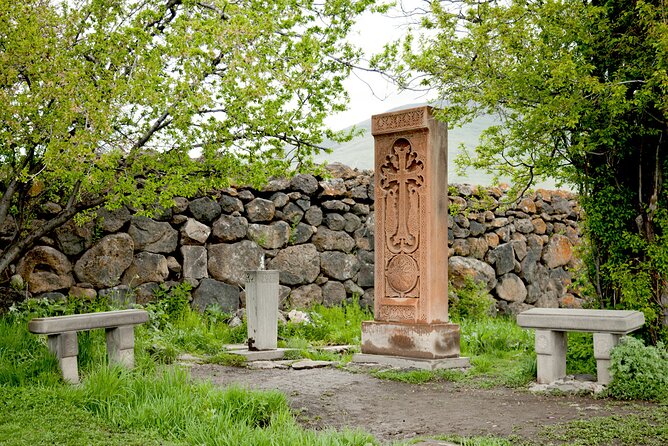
Your final site is Aghtsk, where you’ll see the Arshakid kings’ mausoleum.
It’s in the Aragatsotn region, in a village setting, and it’s unusual because it holds the remains of both pagan and Christian kings.
The mausoleum itself is a small rectangular hall, but decoration and symbolism do most of the talking.
On the northern wall, there’s a relief of Daniel in the lion den—one of those classic Biblical images that Armenian Christian art also loved.
You’ll also notice ornaments and symbolic carvings that connect pre-Christian ideas with Christian art, and right next to the mausoleum you can see the ruins of a 4th-century church.
You’ll have about 30 minutes, so don’t rush the carvings.
If you want a smart approach: stand back first to see the whole wall pattern, then move in for the relief details. It reads better that way.
Tour value: what you’re really paying for at $29
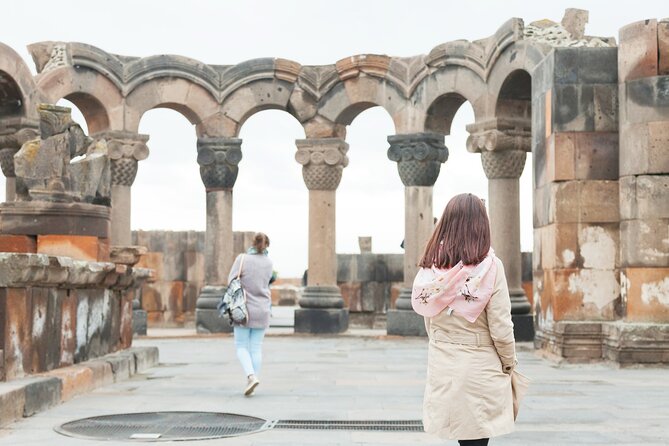
At $29 per person, this itinerary prices like a budget-friendly day trip—but the value comes from what’s bundled.
You get entrance tickets included for the sites, plus bottled water & pastries, and the tour includes snacks and beverages.
That matters in Armenia because buying tickets and then trying to find food between sites can quietly add up.
You also get a professional guide (ENG + RUS consecutively) and an insured, air-conditioned ride with WiFi.
A day that moves between monasteries is not the easiest DIY route, especially if you want context, not just GPS pins.
What to plan for: lunch is not included.
So if you tend to eat like a clock, pack a little extra snack for before you start, or be ready to buy lunch on your own during the day.
Guide and group dynamics: when bilingual info helps or slows
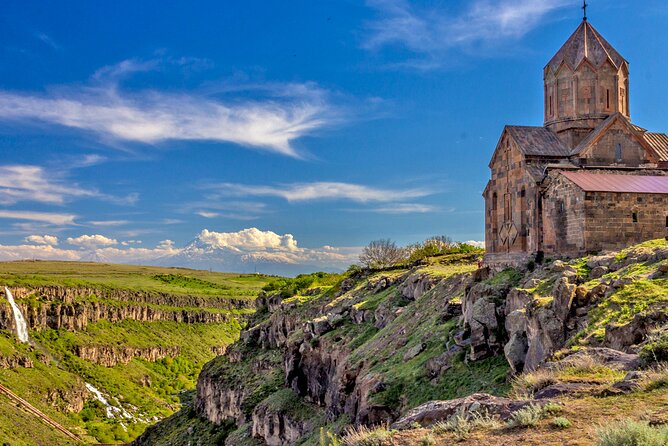
This is where the experience can feel either very smooth or slightly annoying.
The guide provides English plus Russian consecutively, and the tour can run with up to 18 people, which is big enough for energy but small enough to keep control.
In the best moments, the guide brings humor and real explanations that make the churches feel lived-in, not like a slide show.
Some guides you might encounter include names like Marina and Karina—and when a guide is confident, both language groups can still get a fair share of attention.
One caution: the multilingual setup can create waiting.
If you’re the type who hates standing around, you’ll want to stay mentally flexible during transition points when the guide finishes one language block and then switches to the other.
Practical tips for monastery-hopping without getting grumpy
If you want the day to feel easy, show up ready for uneven stone, short visits, and changing light.
Wear comfortable shoes, since church areas and mausoleum surroundings are built for walking, not for your fancy footwear.
Bring a light layer. Even with an all-weather operation, it’s still a full outdoor day with open church courtyards.
And since the day is about 5 to 6 hours, don’t rely only on the snacks—keep a small personal backup item in your bag if you get hungry fast.
Photography is usually easier when you pause instead of firing off shots in motion.
For each site, pick one “anchor” detail—portal carvings at Hovhannavank, scriptorium context at Saghmosavank, the cross-shaped plan at Karmravor, or the lion-den relief at Aghtsk—then photograph around it.
Should you book this tour?
Book it if you want a structured, first-timer-friendly introduction to the Yerevan region without the stress of planning.
The mix is smart: ancient Armenian churches, a scriptorium story that adds depth, a compact architectural stop in Ashtarak, and a chocolate experience that breaks the monotony in a good way.
Skip it (or at least consider it carefully) if you hate bilingual timing and standing around for language switching, because this tour runs English + Russian consecutively.
Also, if you’re a slow museum wanderer, you might feel the site times are short—but that’s the trade for hitting all five stops in one day.
If you’re aiming for value, convenience, and a day that feels like a real highlight reel of churches plus a sweet payoff, this is a strong choice.
FAQ
What is the duration of the tour?
It’s about 5 to 6 hours (approx.).
Where do we meet, and what time does it start?
You meet at Hyur Service, 96 Nalbandyan poxoc, Yerevan 0010, and the tour starts at 10:00 am.
Are entrance fees included?
Yes, all entrance fees are included.
What’s included in the price besides tickets?
The tour includes a professional guide (ENG + RUS consecutively), air-conditioned vehicle transport, bottled water & pastries, snacks and beverages, WiFi in the vehicle, and vehicle & passenger insurance.
Is lunch included?
No, a lunch stop is not included.
How long is the chocolate museum visit?
The Gourmet Dourme mini chocolate museum visit lasts about 30–40 minutes, including watching production and a chocolate tasting.
How big is the group?
The tour has a maximum of 18 travelers.
Does the tour run in bad weather?
Yes, it operates in all weather conditions, so dress appropriately.
If you tell me your travel dates and whether you prefer more walking or more explanation, I can help you decide if this timing suits your style.