REVIEW · COZUMEL
Chocolate & Margarita Workshop
Book on Viator →Operated by THE MAYAN CACAO COMPANY · Bookable on Viator
That smell of cacao hits fast. This Cozumel workshop mixes Mayan food culture with hands-on making of a chocolate margarita and a chocolate bar. I love that you get both the story and the edible payoff; the only real drawback is that you may need to sort out your own taxi plan, especially if you’re starting from a cruise port.
The experience runs about 1 hour 40 minutes, and the group stays small (max 15), so the guide can actually answer your questions while you’re hands-on with the tools. You’ll also get a mobile ticket and a certified Spanish/English-speaking guide, and you can usually expect English to be available.
Before you go, pack mosquito repellent and wear comfortable walking shoes. It’s not a marathon, but you do move around the property, and you’ll be standing while you grind, mix, and taste your way through cacao and tequila.
In This Review
- Key things to know before you go
- Chocolate, cacao, and margarita culture in Cozumel
- Stop 1: The Mayan Cacao Company and a “real house” look at cacao life
- Handmade chocolate bar workshop: tools, recipe, and the slow magic
- The chocolate margarita: tequila meets cacao in a very specific way
- The small-group advantage (max 15): better pace, better questions
- What you’re really paying for: value in food, culture, and hands-on results
- Transportation and timing from Cozumel cruise ports
- What to bring and how to enjoy the full 1 hour 40 minutes
- Should you book the Chocolate & Margarita Workshop?
- FAQ
- How long is the Chocolate & Margarita Workshop in Cozumel?
- Where does the tour take place?
- Is the tour offered in English?
- What will I make during the workshop?
- What’s included in the price?
- Do I need to arrange transportation?
- What should I bring to be comfortable?
Key things to know before you go
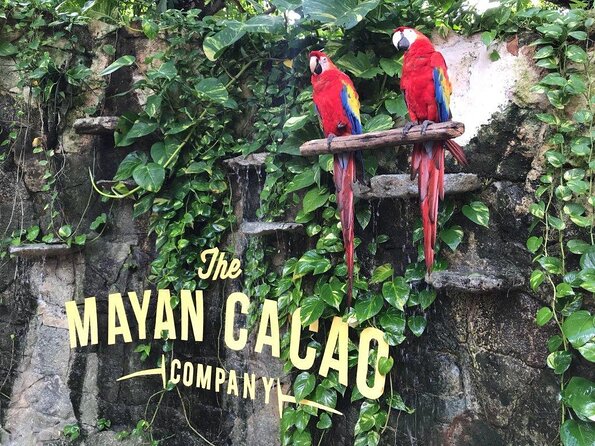
- Mayan cacao “house” start: You begin with everyday Mayan life and cacao used in trade, plus local plants and herbs.
- Real hands-on chocolate bar: You use traditional-style utensils to make your own bar, not just watch.
- Chocolate margarita is the star drink: You’ll craft a cacao-forward margarita with tequila.
- Small group pace: With up to 15 people, it’s easier to ask questions and actually participate.
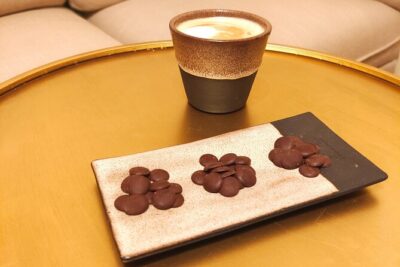
- Tasting before you buy: You get time to try different cocoa products at the end.
- Transportation is on you: There isn’t a built-in transport solution you can fully rely on from cruise ports.
Chocolate, cacao, and margarita culture in Cozumel
Cozumel can be all beaches and excursions that feel the same. This one breaks that pattern. In about 90 minutes, you’ll get pulled into a Mayan-style way of thinking about cacao—then you’ll make something you can literally take with you: a chocolate bar and a chocolate margarita.
I like the balance here. It’s not a lecture where you sit and sweat. You get the history bits, sure, but they connect directly to why cacao mattered and what goes into the flavors you’re tasting. And yes, the tequila shows up. The result tastes like you ordered dessert and a drink at the same time.
You can also read our reviews of more tours and experiences in Cozumel.
Stop 1: The Mayan Cacao Company and a “real house” look at cacao life
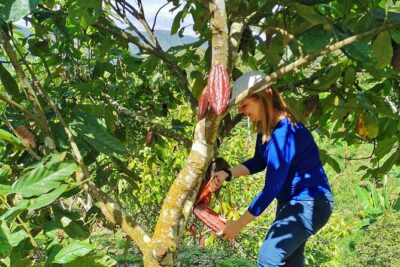
You start at the Mayan Cacao Company with a visit to a real Mayan house setup. This is where the experience earns its name: cacao isn’t just a flavor, it’s a piece of daily life and a tool for trade. You’ll learn how Mayans used cacao beans as currency, which gives you a whole new lens for why people still treat chocolate as something special rather than just a snack.
You’ll also get a picture of day-to-day life: gardening techniques, what people grew, and how they used what was around them. One of the more memorable parts is the stop that pairs cacao with food culture—there’s a freshly made tortilla topped with a regional sauce that’s made primarily with chocolate. That’s a quick “aha” moment: cacao isn’t always sweet. It can be savory, earthy, and complex.
Practical tip: take a moment during this portion to slow down and look at the plants and layout. The guide shares details as you walk, but you’ll enjoy it more if you’re not rushing to the workshop just for the tasting.
Handmade chocolate bar workshop: tools, recipe, and the slow magic
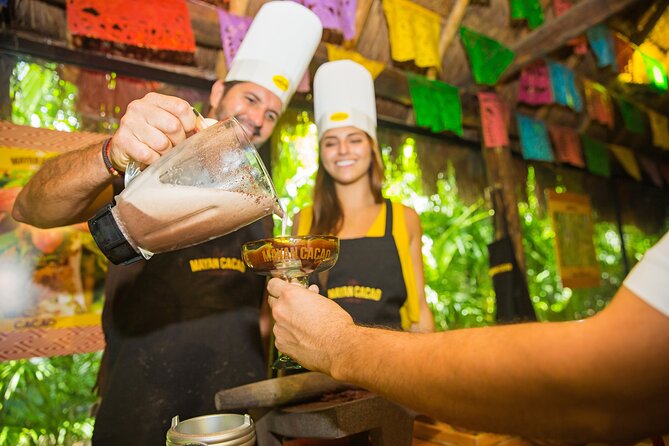
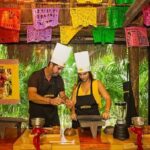
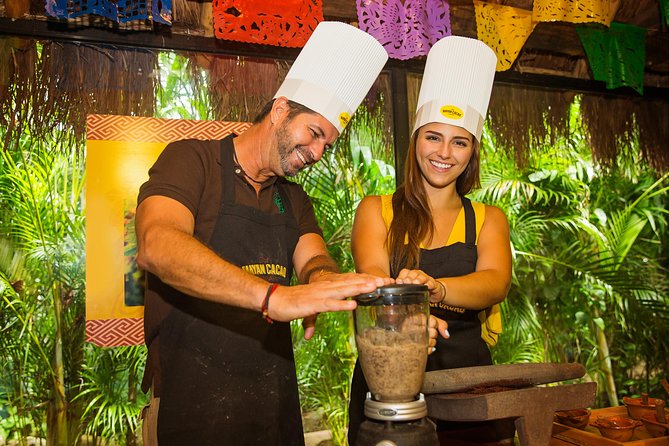
After the cultural start, the session moves into making mode. This is where you turn from observer into participant. You’ll learn to make your own handmade chocolate bar using an authentic Mayan recipe approach and the appropriate utensils.
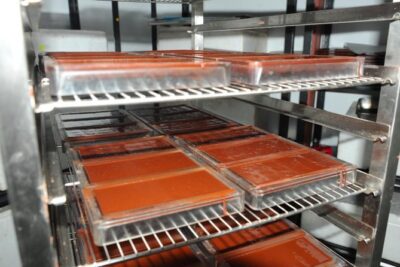
Don’t expect a “press a button” chocolate experience. The process takes some work, and you’ll feel it in your hands. That’s a good thing. When you grind and mix, you start to understand why cacao tastes different depending on how it’s processed and what gets blended in.
What I like about this part is how it reframes chocolate quality. Instead of thinking only about sweetness, you start paying attention to texture and how the ingredients behave together. It makes the final tasting feel earned, not random.
If you’re traveling with kids or seniors, this part is still friendly. The pace is described as manageable, and the group size helps. It’s hands-on without feeling like you’re being thrown into a skills competition.
The chocolate margarita: tequila meets cacao in a very specific way
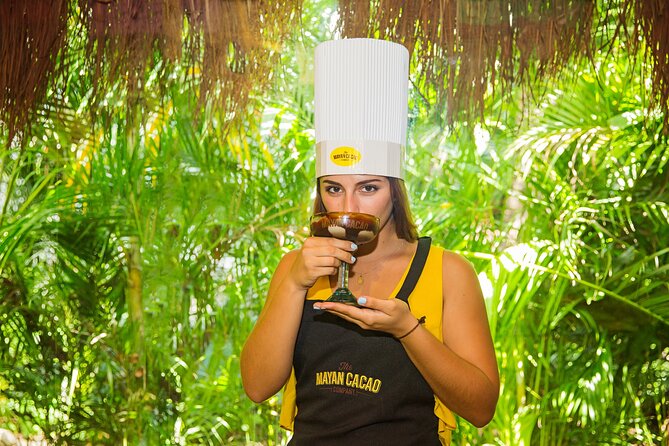
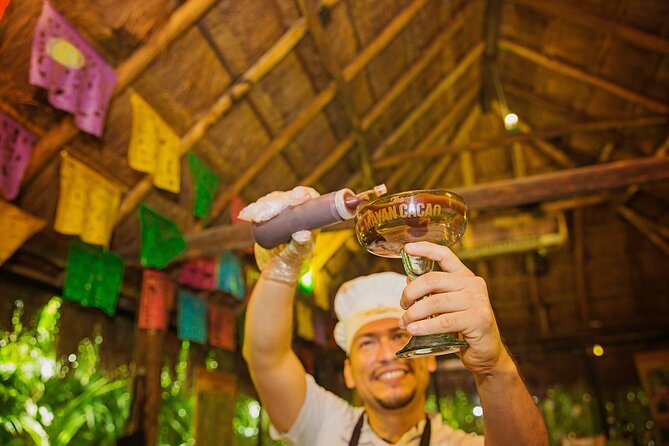
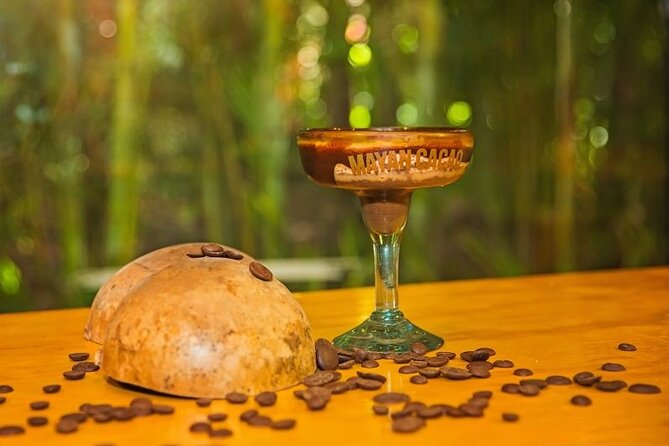
Then comes the drink everyone talks about: the chocolate margarita. This is the workshop specialty, and you’ll actually make it—so you’re not just handed a glass and told to enjoy.
You’ll learn the origin and idea behind this drink, including the Mexican touch of tequila combined with cacao. And because this is built around chocolate rather than sugar water, it tastes different than most “chocolate-flavored” drinks you might be used to. The cacao brings depth, and the tequila keeps it from tasting like dessert foam.
Also, a small detail that matters: you’ll finish the making process with a real sense of what you chose and why. Guides like Angel, Roberto, Eduardo, and Paty are repeatedly praised for keeping the energy up while explaining what’s happening. If you get one of these personalities, you’ll probably leave with more than a drink—you’ll leave with a better sense of how the flavors fit together.
The small-group advantage (max 15): better pace, better questions
A max group size of 15 is a big deal in a workshop like this. It’s the difference between feeling like a customer and feeling like a participant.
Here’s what it means in practice:
- You’re less likely to be stuck waiting while someone else does the work.
- Your guide can address your questions while you’re mixing or tasting.
- You’re more likely to get attention if you need extra help during the process.
The experience is offered in English, and the guide is certified and speaks both English and Spanish. That helps if your Spanish is basic or you’re traveling with someone who prefers one language over the other.
And because this is food-and-drink centered, the small group size also helps with flow. You’re tasting while you go, and that’s easier when you’re not in a line of 50 people.
What you’re really paying for: value in food, culture, and hands-on results
At $45 per person for around 1 hour 40 minutes, it can sound like a “cute activity” price. But the value comes from what you get for the money.
You’re not just touring a shop. You’re paying for:
- a guided cultural start that connects cacao to Mayan life,
- a hands-on chocolate bar you make yourself,
- and a chocolate margarita you craft as part of the workshop.
That combination is where the price makes sense. If you’ve done tours where you only watch, you know the feeling: you’re entertained for a short time, then you pay, then you leave. Here, you take home the fact that you did the work, and you get a drink experience that’s tied directly to what you learned.
Is it “cheap”? No. But it’s also not inflated like some cruise-port “shopping stop with a side of culture.” This feels like a proper food activity—worth it if you enjoy hands-on learning and tasting.
Transportation and timing from Cozumel cruise ports
This is the one area where you should think like an adult planner.
The experience doesn’t clearly promise that someone will deliver you to the venue. If you’re getting here from a cruise port, plan to use a taxi and be ready to figure out pickup coordination on your own. One common trip pattern described is a 15-minute ride from the cruise port, with the caveat that taxis waiting at the venue can be less convenient once you’re done—because the area is changing and not always set up for quick return rides.
My advice is simple: don’t assume the “wait for you” part. If you want an easier finish, set expectations early with your guide once you arrive. They can help you call a cab for your return, which can save you a lot of standing around feeling hungry and slightly annoyed.
If you’re not on a cruise—if you’re already staying nearby—this becomes much less of an issue.
What to bring and how to enjoy the full 1 hour 40 minutes
Don’t overpack. You’ll be making food and mixing drinks, so you want to move comfortably and not worry about your feet.
Bring:
- comfortable walking shoes (you’ll walk the property),
- mosquito repellent (recommended),
- and a light layer if you get cool in short bursts in shaded areas.
Wear clothes you don’t mind getting a tiny bit chocolate-adjacent. It’s not described as messy chaos, but food workshops are still food workshops.
Once you arrive, go with curiosity. Ask questions about cacao currency, the gardening techniques, and how cacao becomes different based on processing. That’s the stuff that makes the tasting click.
Also, take time at the end to sample cocoa products before buying. You’ll be able to try different flavors of chocolate and see items like soaps, creams, sauces, and handmade chocolate. It’s a good moment to turn your learning into a souvenir that isn’t just a random magnet.
Should you book the Chocolate & Margarita Workshop?
Book it if you want a food-first experience in Cozumel—one that combines Mayan cacao culture with actual making and tasting. It’s especially worth it for chocolate lovers, tequila drinkers who want something different, and families who prefer small groups over big bus tours.
Skip it (or go in with extra planning) if you hate logistics from a cruise port. You’ll likely need to handle your own taxi timing, and that can add stress if you’re on a tight ship schedule.
If you can handle that one planning detail, I think you’ll feel like you got your money’s worth: cacao story up front, real chocolate work in the middle, and a chocolate margarita that turns learning into something you’ll remember for the taste.
FAQ
How long is the Chocolate & Margarita Workshop in Cozumel?
It lasts about 1 hour 40 minutes.
Where does the tour take place?
The workshop is in Cozumel, Mexico, at The Mayan Cacao Company.
Is the tour offered in English?
Yes. The experience is offered in English, and the guide is certified and speaks Spanish and English.
What will I make during the workshop?
You’ll make a handmade chocolate bar using a Mayan-style recipe approach, and you’ll also make a chocolate margarita.
What’s included in the price?
The admission ticket is included, and you’ll have a certified Spanish and English-speaking guide.
Do I need to arrange transportation?
Transportation isn’t clearly included, so if you’re coming from a cruise port, plan on arranging your own taxi and coordinating return once you’re done.
What should I bring to be comfortable?
Wear comfortable walking shoes and use mosquito repellent, since it’s recommended.